
Walk into any local market in Vietnam and you’ll see it instantly – piles of fruits in every colour, shape, and texture you didn’t know existed.
It’s not just about mangoes or bananas here. Vietnam’s fruit culture is seasonal, regional, and deeply woven into everyday life, from roadside snacks to family gatherings.
We’ve wandered through enough markets to know one thing:
The real adventure isn’t in restaurants – it’s in the fruit stalls.
Here are a few that might surprise you
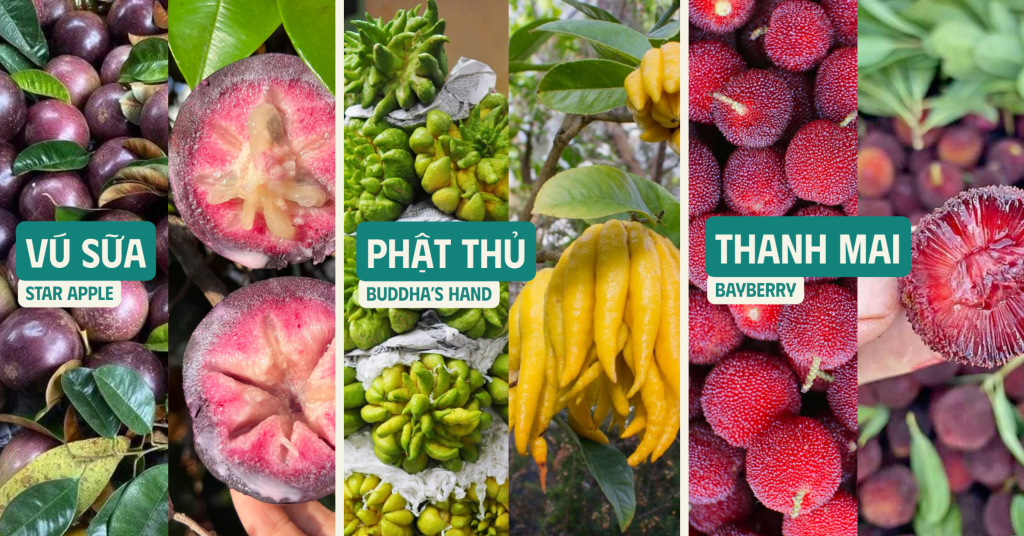
Vú Sữa (Star Apple)
Sweet, milky, and slightly floral – this is almost dessert in disguise.
Locals gently roll it in their hands to soften the inside before eating, then scoop out the creamy flesh. It’s especially popular in southern Vietnam during the cooler months, often served chilled for maximum sweetness.
Phật Thủ (Buddha’s Hand)
This might be the strangest citrus you’ll ever see – and you can’t even juice it.
Instead of pulp, it’s all fragrant peel. You’ll often spot it on home altars as a symbol of luck, but it’s also used to infuse tea, candy, and even traditional remedies.
Thanh Mai (Bayberry)
Juicy, tangy, and refreshing – like a tropical cousin of a raspberry.
Found mostly in northern Vietnam, thanh mai has a short season, making it feel like a rare treat. It’s often eaten fresh with salt, soaked in sugar, or turned into syrup and wine.
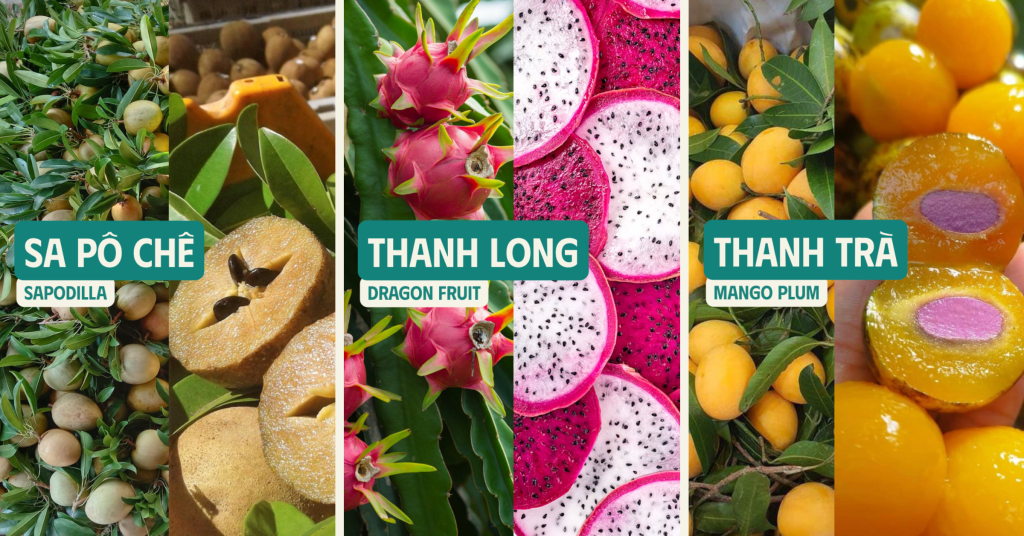
Sa Pô Chê (Sapodilla)
Think caramel, brown sugar, and soft pudding – all in one bite.
This is incredibly sweet and best eaten when very ripe. Locals love it as a natural dessert, no prep needed.
Thanh Long (Dragon Fruit)
Light, refreshing, and quietly iconic – Vietnam is one of the world’s largest producers.
You’ll find it everywhere, from fruit platters to smoothies. Despite its bold appearance, the flavour is subtle, making it perfect for hot, humid days.
Thanh Trà (Hue Citrus)
Delicate, lightly sweet, and fragrant – a softer take on grapefruit.
A speciality from central Vietnam, especially around Huế, this fruit is often shared during its short summer season. It’s less bitter than grapefruit and incredibly refreshing.
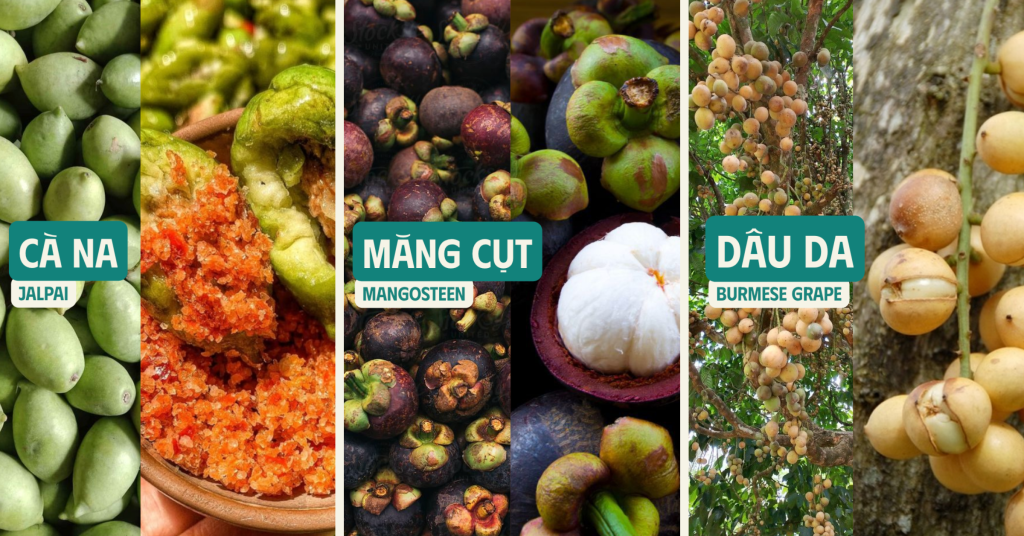
Cà Na (Indian Olive)
Sour, salty, sweet – sometimes all at once.
Rarely eaten fresh, cà na is usually soaked in salt, sugar, or chilli to balance its intense flavour. It’s a nostalgic street snack for many locals.
Măng Cụt (Mangosteen)
Sweet, juicy, and slightly tangy – often called the “queen of fruits.”
Crack open the thick purple shell to reveal soft white segments inside. It’s one of the most loved fruits in Vietnam, especially during the rainy season.
Dâu Da (Burmese Grape)
Sweet, tangy, and slightly citrusy with a hint of bitterness.
Often peeled and eaten with chilli salt, this fruit is a favourite among street vendors. It’s messy, sticky, and totally worth it.
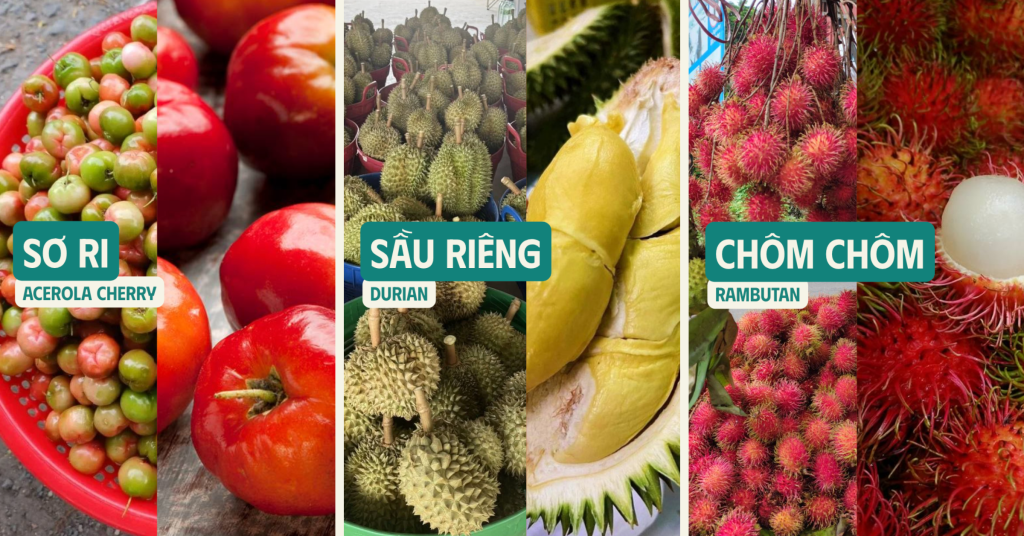
Sơ Ri (Acerola Cherry)
Tiny but powerful, intensely sour with a serious vitamin C kick.
Most people don’t eat it raw. Instead, it’s blended into juice, made into syrup, or eaten with chilli salt for a bold flavour hit.
Sầu Riêng (Durian)
Rich, creamy, and famously pungent – the fruit everyone argues about.
Some people fall in love instantly. Others can’t get past the smell. But in Vietnam, durian is king – and during peak season, people will travel just to find the best ones.
Chôm Chôm (Rambutan)
Juicy, floral, and honey-sweet: a tropical classic.
Underneath its hairy red shell is a translucent, lychee-like flesh. You’ll see it everywhere during the rainy season, piled high in markets.
Where to Buy Fruits in Vietnam
Hanoi Locations
HCMC Locations
Ready to Try Them Yourself?
Next time you’re exploring a local market or looking for a fresh fruit stall in Vietnam, don’t just stick to what you know.
Pick something unfamiliar. Ask how to eat it. Taste it anyway.
 See more recommendations in Vietnam HERE.
And don’t forget to explore our website for more local eats and hidden gems around Vietnam.